A family spending $800 a month at the supermarket is doing roughly $9,600 a year on groceries. That sounds high until you realize it works out to about $200 a week — well within range for a household of three or four eating mostly at home.
The instinct is to grab the highest grocery rate — Blue Cash Preferred's 6% at the supermarket. But the highest rate is only useful inside its cap, and BCP's $6,000-a-year cap plus its 1x on everything else keeps it mid-pack at this spend. The cards that win reward more than one category, never run out of bonus rate, and don't hide a big fee behind credits you may never use.
Key insight
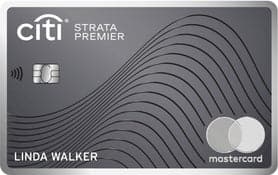
Blue Cash Preferred earns 6% at supermarkets — but only on the first $6,000 per year, then 1%. At $9,600/yr in groceries, $3,600 of your spend drops to 1%, and because BCP rewards almost nothing else, it finishes last of the top five here. Amex Gold earns the most raw points — 4x up to $25,000/yr on groceries AND dining — but we charge its full $325 fee (its Uber/dining/Resy/Dunkin' credits count only when you tell the calculator you use them), and that fee costs it the lead: ~$586/yr net, behind even the flat-2x Venture. The winner is Citi Strata Premier at ~$735/yr — 3x on groceries, dining, gas, and travel for a $95 fee — with Chase Aeroplan's 3x close behind. The lesson: on a real family wallet, breadth at a small fee beats both a capped headline rate and a big multiplier behind a big fee.