Best for grocery
The best credit card for groceries
Updated August 17, 2026 · Methodology v2026.09.1 · Ranked by net annual value (rewards minus the full annual fee — credits count only if you use them), not by who pays us.
This profile's spending
grocery: $700/mo · dining: $120/mo · gas: $80/mo · travel: $50/mo · streaming: $20/mo · everything else: $250/mo · total $1,220/mo
Groceries are where a good card quietly pays for itself — but the headline rate is only half the story. The cap is the other half.
Our pick.
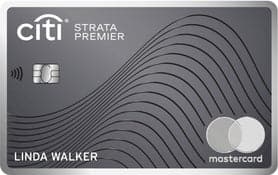
Citi Strata Premier
$467/yr net
3x at the register$95 fee already subtracted above
Best grocery card by net value for this profile, after the annual fee.
Trade-off: $95 annual fee — already subtracted from every figure here.
Why not Blue Cash Preferred? It earns less on your dining + travel spending — $84/yr behind on this exact spending.
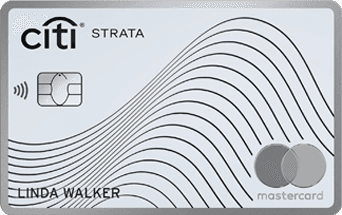
Why not the $0-fee option (Citi Strata)? Your groceries + dining spending earns $209/yr more here — enough to come out $114/yr ahead after the $95 fee.
Beats the best $0-fee alternative (Citi Strata) once you spend about $240/mo on groceries + dining — you're at $820/mo.
The catch most lists skip.
The highest grocery rate is only useful inside its cap. Blue Cash Preferred earns 6% — but only on the first $6,000/year, then 1%. Amex Gold's 4x runs to $25,000/year, but we charge its full $325 fee — its Uber/dining/Resy/Dunkin' credits are opt-in upside, never a fee discount — and on this wallet the capped 6% card nets more until roughly $780/month of groceries. That's why the winners here are uncapped 3x all-rounders with small fees: they reward the whole wallet and never run out of bonus rate. Note: warehouse clubs (Costco) and superstores (Walmart, Target) don't code as supermarkets and won't trigger most grocery bonuses.
See the full trade-offWhere the winner changes —
Net value vs monthly grocery spend
Citi Strata PremierBlue Cash PreferredCiti Strata℠ Card
Hover the chart to read exact values.
View this chart as a table
| Monthly grocery spend | Citi Strata Premier | Blue Cash Preferred | Citi Strata℠ Card |
|---|---|---|---|
| $0/mo | $89 | $-1 | $101 |
| $100/mo | $143 | $71 | $137 |
| $200/mo | $197 | $143 | $173 |
| $300/mo | $251 | $215 | $209 |
| $400/mo | $305 | $287 | $245 |
| $500/mo | $359 | $359 | $281 |
| $600/mo | $413 | $371 | $317 |
| $700/mo | $467 | $383 | $353 |
| $800/mo | $521 | $395 | $389 |
| $900/mo | $575 | $407 | $425 |
| $1,000/mo | $629 | $419 | $461 |
| $1,100/mo | $683 | $431 | $497 |
| $1,200/mo | $737 | $443 | $533 |
| $1,300/mo | $791 | $455 | $569 |
| $1,400/mo | $845 | $467 | $605 |
| $1,500/mo | $899 | $479 | $641 |
Top 5 grocery cards by net value
American Express
$383/yr net
Earns 6x on grocery on the first $6,000/yr, then 1x. Full $95 fee charged.

Advertising disclosure: we may earn a commission if you apply through this link. This does not affect your ranking. Full disclosure
If you redeem points for cash instead —
Same profile, points valued at their guaranteed cash floor (no transfer-partner premium). Flat cash-back cards shine here.
#1Blue Cash Preferred$383/yr
#2Citi Strata℠ Card$353/yr
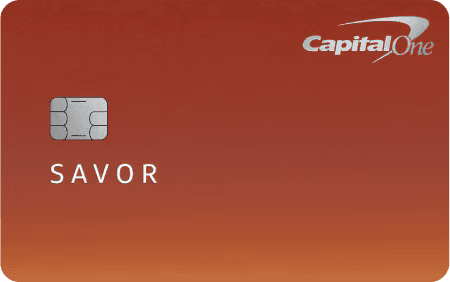
#3Capital One Savor$348/yr
If you spend closer to $400/mo on grocery, the podium shifts.
Your spending isn't this profile.
This ranking is for a grocery-heavy wallet. Enter your own monthly numbers and we'll re-rank all 67 open consumer cards against exactly how you spend.
Run my own numbersFigures are estimates from our net-value model on a sample grocery-weighted profile, with fees counted category-aware (credits count where you'd realize them). See our methodology page. Rates and fees change — verify on the issuer's site before applying.